


Warehouse Automation Solutions
Automated Multi‑Temperature Cold Storage
Store and fulfill ambient, refrigerated, and frozen pharmaceutical products in a single ASRS, without building a cold room or sending workers into one. Peltier actively cooled totes hold the temperature. The building stays ambient.
- 2026 ASRS Innovation of the Year, SupplyTech Breakthrough
- Powered by Peltier actively cooled totes
Pharmaceutical cold storage, by the numbers
-
43% of new drugs approved 2018-2023 require cold chain storage
ASHP / Vizient
-
~2× injury rate in refrigerated warehousing vs. all private industry
OSHA, 2026
-
~3× cost per square foot to build cold storage vs. ambient space
Newmark, 2023
-
Now DSCSA package-level traceability is enforceable for wholesalers and large dispensers
FDA
Your cold chain volume is growing. Your cold room only gets more expensive.
The Solution
Cool the tote, not the building
OPEX® automated multi-temperature storage brings cold chain fulfillment of ambient, refrigerated, and frozen products into a single ASRS. Peltier actively cooled totes carry their own cooling, so a refrigerated or frozen setpoint travels with the product instead of belonging to a room. For tote-eligible inventory, that takes the cold room out of the plan.
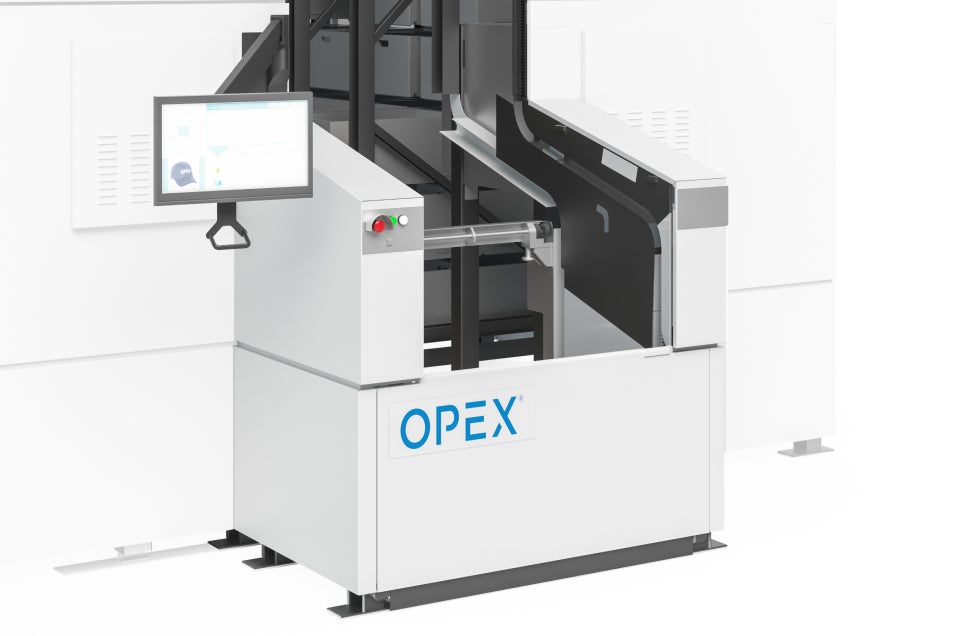
The cooling is compressor free. A solid-state thermoelectric heat pump cools each tote, and heat is carried away using only water mixed with CO2. There are no HFC refrigerants anywhere in the tote: the working fluid carries a GWP of 1, against 1,430 for R-134a and 3,922 for R-404A in the vapor-compression systems a walk-in depends on. Energy is spent only where product is stored. And because every tote travels to an ambient pick station, your team fulfills cold chain orders at room temperature and never enters a cold environment.
Buyer’s Guide
Key considerations when investing in cold storage automation
Every approach to automated cold storage answers the same five questions differently. Here is how to evaluate them, and how tote-level temperature control changes the answers.
-
Where does the cold live?
Where does the cold live? Factor Walk-in cold room Zone-based cold ASRS Tote-level (OPEX) Cold scope A refrigerated room you build and power forever A refrigerated section of the warehouse Inside each tote, only where product is stored Worker environment Workers pick inside the cold Pick ports in or beside chilled zones Ambient pick stations; no one enters the cold Build-out Roughly 3× ambient construction cost Insulated sections plus refrigeration plant Drops into an ambient ASRS; no cold construction Failure exposure One compressor failure risks the room’s entire inventory Zone plant failure risks the zone One tote risks a fraction of inventory; distributed by design -
What inventory is tote-eligible?
Totes hold up to 35L with insert sleeves that create customizable compartments, covering vials, sample containers, unit-of-use packages, and most refrigerated pharmaceuticals. Oversized or bulk cold items may still need conventional cold storage in a hybrid layout. An OPEX solutions engineer will cube your actual SKU file before any proposal.
-
What does the energy really cost?
Tote-level cooling spends energy only on occupied totes; empty totes power down. Whole-room refrigeration cools the full volume whether it is full or empty. The comparison depends on your utilization, which is why our savings estimate always shows its assumptions.
-
How is temperature documented for audits?
Each tote reports its own temperature in real time, holds its own configurable setpoint, and raises an alert when it moves outside its band. Every reading is timestamped and written to a tamper-evident, per-tote audit log, stored redundantly on site and in the cloud, with technical controls that support 21 CFR Part 11 requirements. The same data reaches your own environmental monitoring or warehouse system through API messages, and OPEX works with your electronic data storage policies during system design.
-
What happens if power fails?
Tote cooling can be carried on facility backup power, and the system has a documented manual retrieval procedure so inventory stays reachable even if the ASRS itself is down. Off power entirely at 50% capacity in a 70°F (21°C) ambient space, a refrigerated tote holds product below 40°F (4.4°C) for 77 minutes and a freezer tote holds product below 10°F (-12°C) for 168 minutes, documented windows for backup power to pick up or for an orderly response. Monitoring does not stop either: an internal battery keeps each tote reporting telemetry for roughly 40 hours off power, and if a building-wide outage takes connectivity down, the data becomes available once the connection is restored. Your specific configuration is reviewed against your risk assessment during system design.
Why It Matters
Six ways tote-level automation changes the cold storage math
-
No cold construction
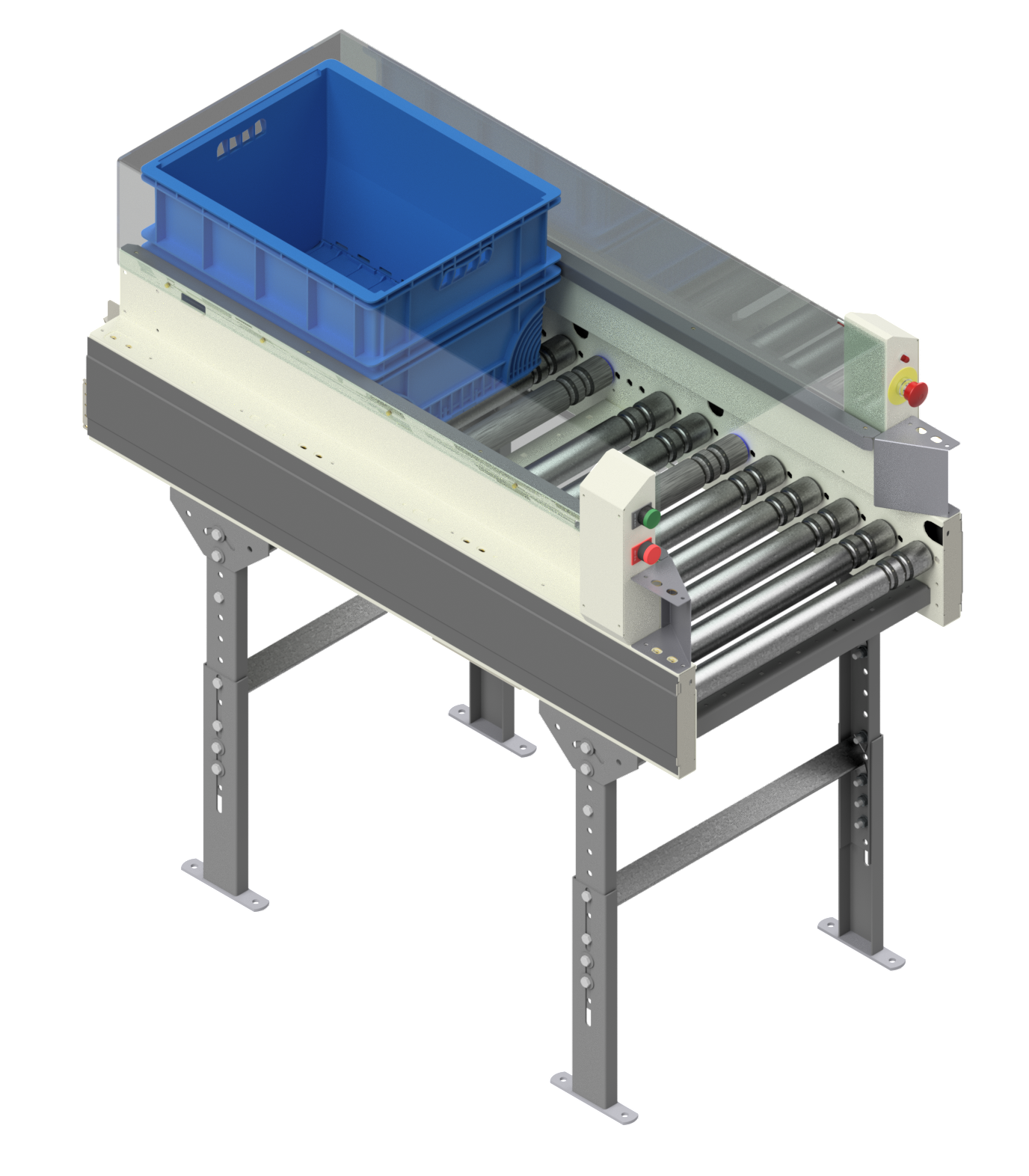
Add cold chain capability to an ambient DC, or retrofit an existing cold room with Tote I/O delivery to ambient pick stations.
-
Ambient workforce
No PPE, no cold-shift premiums, no freezer door. Cold-zone work carries roughly twice the injury rate of private industry; your team simply never does it.
-
Energy where it counts
Occupied totes draw power. Empty totes power down. Whole rooms never do either.
-
Distributed risk
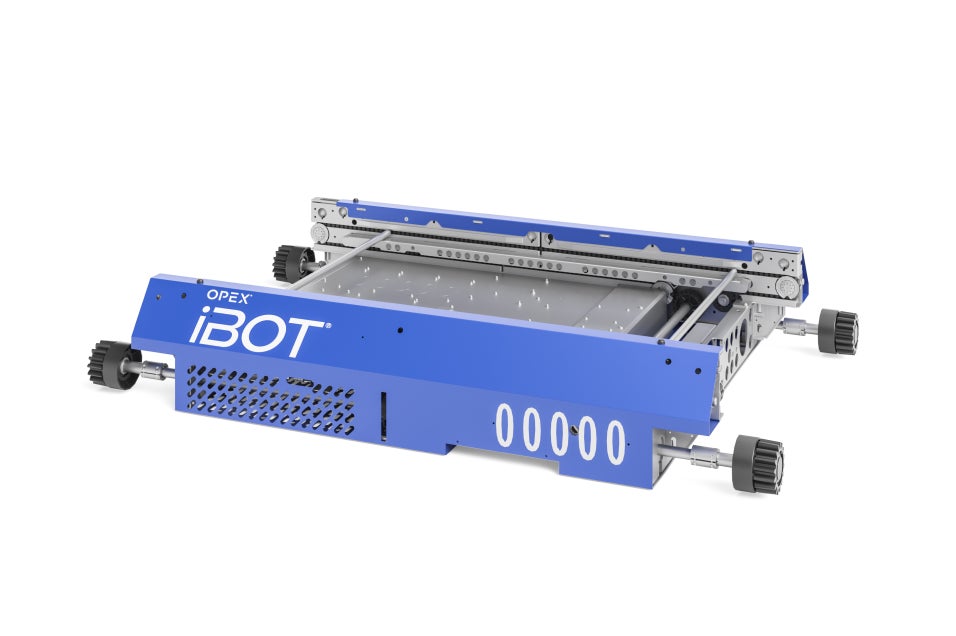
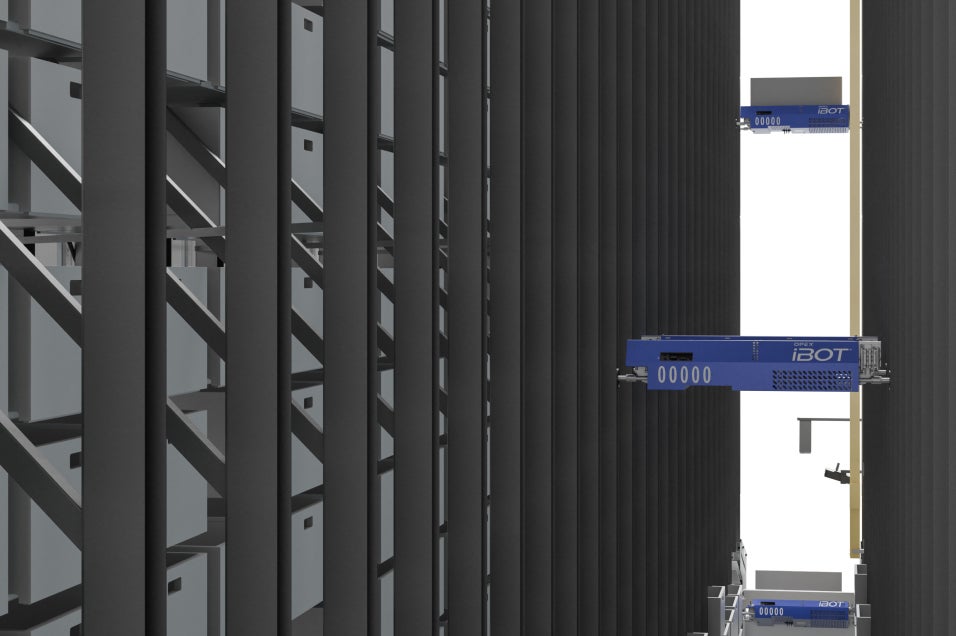
No single cold point of failure. iBOT® robots are individually removable without taking the system offline.
-
Compliance confidence
Tote setpoints sit within USP <659> refrigerator and freezer bands, and the system supports DSCSA electronic traceability workflows.
-
Scale by the tote
Growth means adding totes, not construction projects. Capacity arrives in weeks, not building permits.
How It Works
Inside the automated cold storage system
The tote is the cold room
Peltier actively cooled totes hold refrigerated (3.3°C) or frozen (-17.8°C) setpoints with tote-level precision. Insert sleeves create customizable compartments so varied products store together efficiently.
IoT connectivity lets totes power down when empty, so energy is spent only where product is stored.
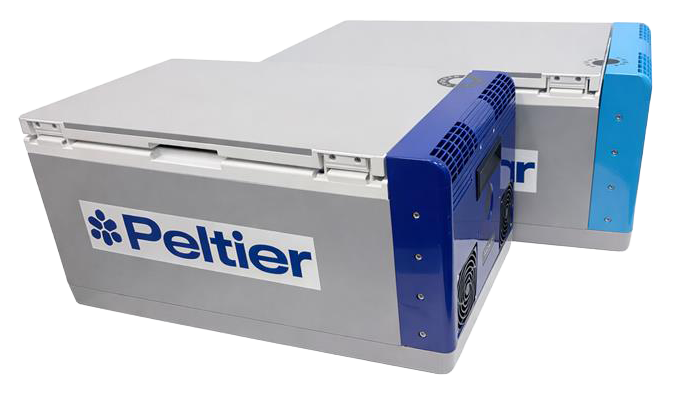
Tote specifications
| Specification | Peltier Refrigerator Tote | Peltier Freezer Tote |
|---|---|---|
| Temperature setpoint | 37.94°F | -0.04°F |
| Internal volume | 35L | 32L |
| Weight | 21 lbs. | 21 lbs. |
| Energy consumption | 125W pull-down, 40W steady state | 290W pull-down, 140W steady state |
| Operating ambient range | 37°F to 82°F | 37°F to 82°F |
| Cooling technology | Compressor free: solid-state thermoelectric cooler (TEC). Heat rejected by a water and CO2 working fluid, GWP 1. No HFC refrigerants (conventional refrigeration: R-134a GWP 1,430; R-404A GWP 3,922). | |
What does your cold room really cost per year?
Estimate the annual cost a walk-in creates, and the payback range for tote-level automation. Every assumption is shown.
Payback
1.7 to 3.8 years
Your walk-in scenario creates an estimated $55,533/year in operating cost.
Assumptions shown, always: 240 totes at $1,000 each (pending confirmation); 40W refrigerator totes at 60% duty cycle, all powered; walk-in at 50,000 kWh/yr (pending engineering verification); $2.50/hr cold differential on all paid hours; PPE $300/worker/yr; failure-risk avoidance = inventory value / 8-year interval, 95% risk reduction; GxP temperature mapping and IQ/OQ/PQ at $4,000 per event, re-qualified every 3 years (regulated operations only). Range = with and without failure-risk avoidance. This is an estimate, not a quote.
Speak with an Expert
Find out how multi-temperature automation can improve your operations
An OPEX solutions engineer replies within one business day.
OPEX configures every system around your facility, your temperature zones, and your throughput.
We use this information to prepare your reply and will never sell it. See the OPEX privacy policy.
The Systems Behind It
The ASRS platforms behind it
-
-

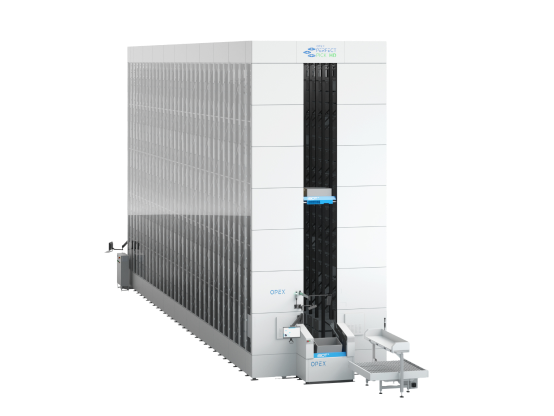
Infinity®
Scalable ASRS platform with temperature controlled totes for growing operations.
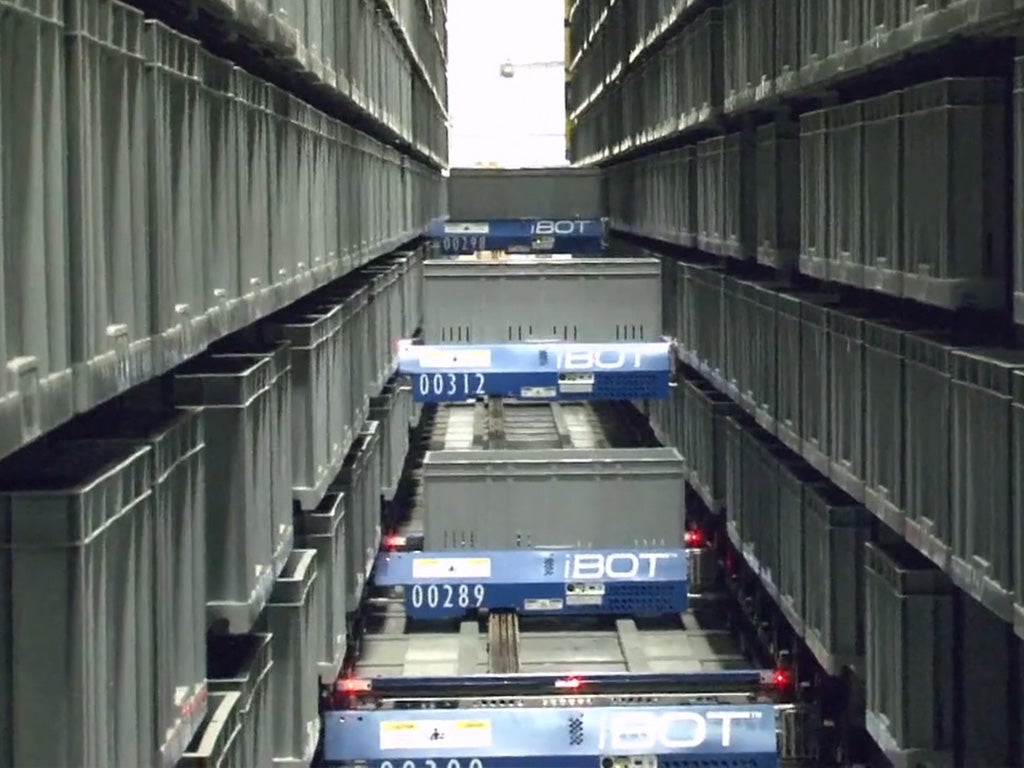
“The Perfect Pick system is part of the whole idea of this campus – to provide efficiency and enhanced customer service to our customers.”
Perfect Pick HD installed inside 1,500 square feet of 39°F cold storage, with 2,990 totes routed out to ambient pick stations at 1,200 dual-cycle transactions per hour. Read the case study
Why Choose OPEX
A partner for life, not a vendor
50 years, family-owned
Engineering automation since 1975, with the stability to support your system for decades.
First at scale
First to deploy actively cooled totes in a multi-deep ASRS at scale, on tote-interface, power, and segmentation engineering others could not solve.
Configurable systems
OPEX configures every system around your facility, your temperature zones, and your throughput.
Proven reliability
Named 2026 ASRS Innovation of the Year by SupplyTech Breakthrough.
Go Deeper
Resources
FAQ
Automated cold storage questions, answered
Are OPEX warehouse solutions suitable for cold storage environments?
Yes, in two configurations: an ASRS installed inside an existing refrigerated room (operating at approximately 34°F, with Tote I/O delivering totes to ambient pick stations), or actively cooled Peltier totes holding refrigerated and frozen setpoints inside an ambient ASRS, so no cold room is needed for tote-eligible inventory.
Can automated cold storage systems reduce energy consumption?
They can, when cooling follows the inventory. Tote-level cooling spends energy only on occupied totes and powers empty totes down, while a walk-in cools its full volume around the clock. Actual savings depend on your utilization, which is why our estimator shows every assumption.
How does cold storage automation improve pharmacy and lab operations?
Workers pick at ambient temperature instead of entering cold rooms, retrieval is goods-to-person, and each serialized item is tracked by location in support of DSCSA electronic traceability workflows.
What temperatures do the totes maintain?
Refrigerated totes hold a 3.3°C setpoint and freezer totes hold -17.8°C, within the USP <659> refrigerator and freezer bands that pharmaceutical labeling points to.
What is a cold storage warehouse alternative for pharma?
For tote-eligible pharmaceutical inventory, an automated multi-temperature ASRS replaces walk-in construction entirely: the cold lives inside each tote rather than in a room you build, power, and staff.
Does the system support temperature mapping and IQ/OQ/PQ?
Validation protocols, deliverables, and acceptance criteria are defined per project scope and executed alongside your quality group. And because each tote is a self-contained, self-controlled cold space, there is no room to map: the recurring temperature-mapping exercise a walk-in requires goes away, and qualification focuses on the totes and the monitoring path.
How are tote temperature sensors verified?
OPEX Service performs a yearly inspection that validates the temperature each tote reports against NIST-certified calibrated measurement devices, and delivers the verification report to you as a record for your quality file.

Cold chain fulfillment without the cold room
OPEX configures every system around your facility, your temperature zones, and your throughput. Let’s design yours.