

VLM vs. ASRS: Comparing Vertical Lift Modules to OPEX® Robotic Solutions
15 min read
60-Second Summary
Discover how vertical lift modules and OPEX®’s robotic ASRS compare across throughput, storage density, scalability, and labor efficiency to identify the best fit for your operation. Learn where VLMs excel and where OPEX’s iBOT®-powered Perfect Pick® and Infinity® systems pull ahead in high-volume environments for a measurable return on investment.
Warehouse operations leaders are focused on improving throughput, maximizing storage density, and scaling efficiently while managing tight budgets and labor constraints. According to MHI, 56% of supply chain leaders are increasing technology investments, with 52% spending over $1 million and 17% allocating more than $10 million on AI and robotics solutions.
Vertical lift modules (VLMs) offer a step up from manual operations, but do they deliver the throughput and scalability high-growth warehouses demand? This guide directly compares VLMs to OPEX®’s advanced robotic ASRS, providing the analysis necessary to build a strong business case and showing how OPEX technology overcomes traditional automation limitations.
VLM vs. ASRS: A Head-to-Head Comparison for Warehouse Leaders
Two dominant goods-to-person automation approaches serve modern warehouses: vertical lift machines and robotic ASRS. A VLM uses a single mechanical extractor to retrieve trays from vertical storage and deliver them to a fixed operator station. This vertical lift storage system consolidates inventory into a compact footprint.
Robotic ASRS from OPEX operates differently. Multiple independent iBOT® robots navigate racking structures to retrieve and deliver totes directly to workstations. This approach eliminates the single-extractor bottleneck inherent in VLM machines, enabling simultaneous retrievals and continuous material flow to multiple operators.
Throughput and Speed: The Pace of Your Operations
VLMs deliver meaningful improvements over manual picking. These systems can provide 60% to 70% labor savings with near-100% accuracy levels for small-to-medium picking operations. The limitation lies in the single extractor’s travel time — one tray in, one tray out.
ASRS technology removes this constraint. Automated picking and retrieval can increase productivity up to 300% in high-speed, high-volume applications while maintaining accuracy rates above 99.9%. Multiple iBOTs operate simultaneously, creating continuous inventory flow to workstations. When one robot delivers a tote, others are already retrieving the next picks, eliminating wait time and maximizing throughput during peak seasons.
Storage Density and Footprint: Maximizing Your Existing Space
Vertical lift modules excel at consolidating inventory vertically, reducing floor space requirements compared to traditional shelving. This vertical approach works well for operations prioritizing footprint reduction.
Cubic space utilization tells a different story. OPEX Infinity® provides 35% more storage than competitive goods-to-person systems through triple-deep tote storage and flexible racking that builds around obstructions like columns and HVAC systems. This density advantage means storing more inventory in the same building envelope, deferring costly facility expansions while accommodating growth.
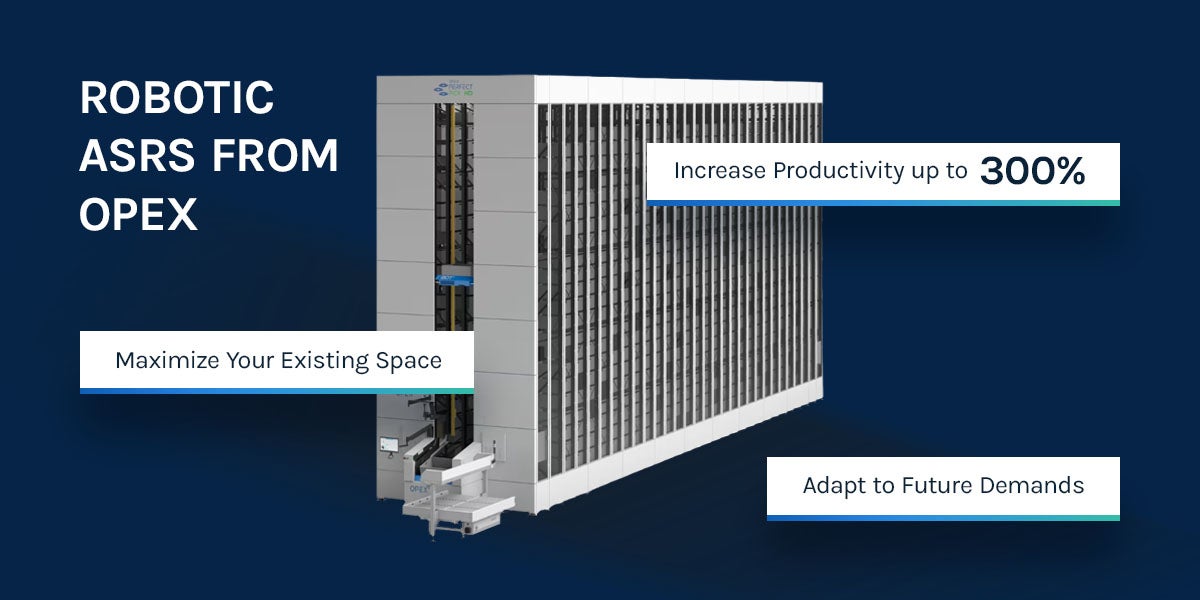
Scalability and Flexibility: Adapting to Future Demands
Modular expandability separates future-proof automation from rigid systems. VLM units require substantial investment and operational disruption to relocate or expand. As business demands grow, adding capacity often means purchasing entirely new units.
OPEX robotic ASRS delivers true modularity. Teams can shut down Infinity’s modular zones for maintenance while the rest of the system operates. Operations can add aisles, expand zones, or integrate additional iBOTs to accommodate more inventory and output without additional manual labor. This approach protects capital investment as operational needs evolve.
Labor Requirements and Ergonomics: Supporting Your Workforce
VLM operators remain stationed at a single access point, waiting for the extractor to deliver trays. This setup limits picking capacity to one operator per unit in most configurations.
Robotic ASRS transforms the operator experience. Teams can configure workstations for multiple simultaneous picking stations, and the continuous delivery model reduces operator idle time. ASRS excels at handling large volumes while reducing manual labor needs and physical strain, allowing employees to focus on higher-value tasks like quality control and order verification rather than walking aisles.
Total Cost of Ownership (TCO): Looking Beyond the Initial Investment
When presenting capital investments to leadership, demonstrating long-term value beyond initial equipment cost proves critical. Total cost of ownership includes throughput capacity, storage density, labor efficiency, scalability, and operational uptime.
Processing more orders per hour with the same labor investment directly impacts profitability. Deferring or eliminating facility expansion costs protects capital for other strategic initiatives. Modular systems allow incremental capacity additions aligned with revenue growth rather than large up-front capital outlays. Operating 24/7 with minimal downtime maximizes asset utilization. For stakeholders evaluating ROI, these factors deliver lower TCO and faster payback compared to systems quickly outpaced by business growth.
When Does a Vertical Lift Module Warehouse Make Sense?
Evaluating which automation approach fits your operational requirements requires understanding both technologies’ strengths. VLMs represent a significant upgrade from manual shelving and serve targeted applications effectively.
Strengths and Common Use Cases for VLMs
VLMs excel in targeted scenarios:
- Spare parts and maintenance storage: Organizing thousands of small parts, components, or tools in manufacturing or maintenance operations where retrieval speed matters less than organization and security.
- High-value inventory storage: Secure, locked storage with restricted access protects sensitive or high-value items like pharmaceuticals, electronics components, or jewelry.
- Manufacturing line-side storage: Storing components directly near production lines reduces downtime by keeping materials accessible without dedicating significant floor space.
Limitations for High-Growth or High-Volume Operations
VLM constraints become apparent in demanding environments:
- Lower throughput and retrieval speeds: VLMs typically retrieve one tray at a time to a single access window. ASRS deploys multiple robots producing hundreds of picks per hour.
- Constrained scalability: VLMs function as stand-alone, rigid cabinets. Expanding capacity when business grows proves difficult. ASRS modularity allows additions as necessary.
- Operator bottlenecks: Most VLMs offer one or two access windows, limiting simultaneous picking. ASRS systems can serve multiple picking stations simultaneously to accelerate order fulfillment.
- Restricted size and load capacity: VLMs handle small-to-medium parts. ASRS systems accommodate heavier loads and varied tote sizes.
The OPEX Advantage
OPEX technology directly addresses the constraints that limit VLM performance in high-volume, high-growth operations.
- Unlocking unmatched throughput with Perfect Pick®: A fleet of independent iBOT robots eliminates the single-point bottleneck of a VLM’s central extractor. Each robot operates autonomously, creating continuous, high-speed order fulfillment that scales with demand. When operations require processing hundreds of orders per hour, multiple iBOTs work simultaneously to maintain material flow.
- Achieving industry-leading storage density with Infinity: The 35% density advantage comes from triple-deep storage capability and flexible racking that maximizes cubic space rather than just floor space. It’s possible to store more inventory in existing facilities, deferring the need for costly building expansions while accommodating inventory growth.
- Future-proofing operations with modular, scalable iBOT technology: Both Perfect Pick and Infinity build around the same core iBOT platform, offering a clear path for growth. Add modules, expand zones, or increase robot count as throughput demands increase. This modularity protects capital investment and adapts to changing operational requirements rather than requiring replacement systems.
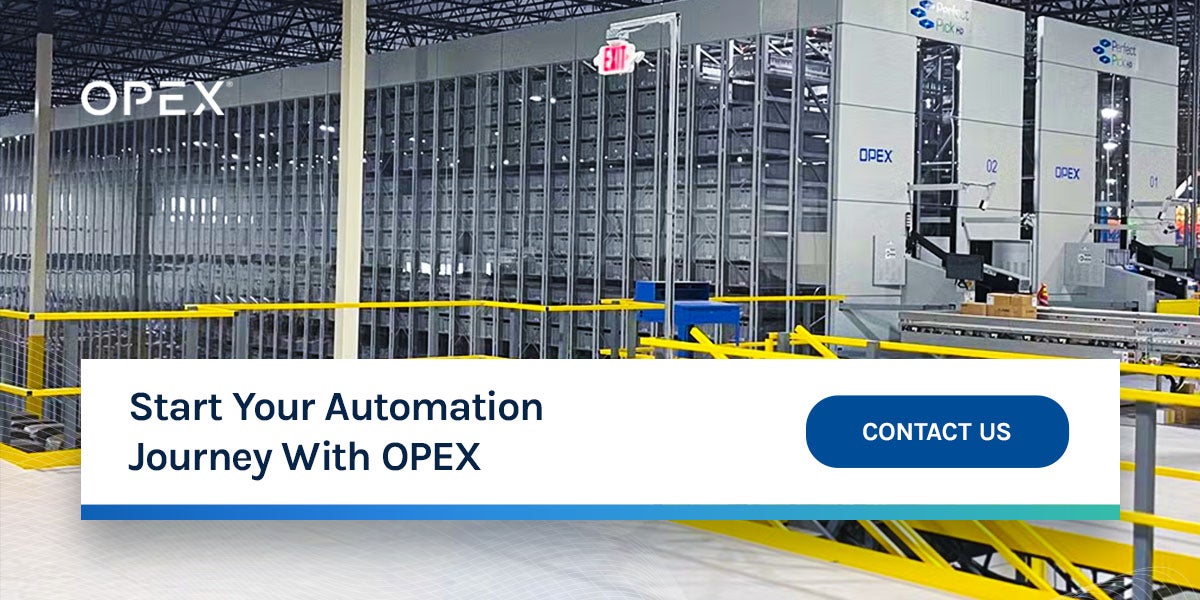
Start Your Automation Journey With OPEX
High-volume operations benefit most from robotic ASRS that delivers exceptional picking speed, industry-leading cubic space optimization, and modular expandability. While VLMs serve targeted applications effectively, facilities experiencing growth or handling demanding order volumes gain a competitive advantage from the continuous material flow and flexible scalability that OPEX Infinity and Perfect Pick provide.
OPEX partners with operations leaders to configure solutions tailored to warehouse goals. From initial design through implementation and ongoing support, OPEX’s in-house technical team ensures seamless integration and optimized performance.
Explore how OPEX’s robotic ASRS can transform warehouse operations. Contact OPEX to discuss configuring a system for specific operational needs.
Other Resources You Might Find Helpful
What is Right-Speed Scanning?
Husch Blackwell Streamlines the Digital Archiving Process, Reducing Time Needed to Prep and Scan Documents by 50%
The American Samoa DOE Streamlines the Digital Records Management Process
Falcon+® Scanner Series
Legastat: When Flatbed Scanning is NOT Enough
Tectel SA Digitizes Medical Records for a Major Hospital with the Document Imaging Solution From OPEX®
Scan2Archive Positioned To Embrace A Digital Future With The Solution From OPEX® And Smartech
Built for Compliance: How Modern Scanning Systems Deliver Operational Excellence
The Importance of Image Quality: Ensuring Legal Admissibility of Scanned Records
Seamless Integration and Future Ready Automation with AI
NEXT LEVEL AUTOMATION
Unlock Operational Efficiency with OPEX
OPEX is powering the future of automation. Contact us to learn more about how our vertically integrated automated solutions can help take your business to new heights.