

A-Frame Sorters vs. Robotic Sorting Systems: Which Is Right for Your Fulfillment Center?
15 min read
60-Second Summary
Discover how A-frame sorters and robotic sorting systems stack up on speed, flexibility, and scalability so you can match the right technology to your order profile. Learn how robotic sortation manages varied SKUs, reclaims floor space, and scales modularly.
Fulfillment centers now manage a wider mix of products and more complex order patterns. A-frame systems use gravity-fed channels that only work with uniform shapes and sizes. Irregular shapes, soft packaging, or fragile goods can jam or suffer damage on the drop. These systems support popular items that are sold and replenished often.
Robotic sorting systems address these limits by using mobile carriers to handle varied shapes and sizes without gravity drops. Carriers deliver items to large put-to-light walls. Your team can add more units to expand the layout as demand grows, making it scalable for any business.
Understanding the A-Frame Sorter
An A-frame picking system manages large volumes of small, similar items in a warehouse. The equipment places items into assigned bins using preset controls. This setup maintains a consistent flow during daily fulfillment activities.
How A-Frame Sorters Work
The A-frame sorter uses a structured dispenser model to process small items at high speed. Operators load products into vertical channels that form an A-shaped frame above a central conveyor. Each channel holds a single SKU to maintain order accuracy. This layout supports consistent output when item dimensions are similar.
Software controls trigger mechanical dispensers to release products at precise intervals. The system drops each item onto a moving belt or into an assigned container. Orders move down the line in a continuous pass and are picked up by an A-frame picking system. There is generally no manual handling during the dispensing cycle.
Where A-Frames Excel: Uniform, High-Velocity SKUs
The A-frame picking system supports operations that move uniform, fast-selling products. Pill bottles, small boxes, and packaged beauty products meet the required size limits. Consistent packaging supports repeatable output during each shift.
High-volume environments rely on steady throughput, especially during flash sales and daily replenishment programs. The system may process thousands of orders per hour when the product profiles remain similar.
The Hidden Costs of A-Frame Rigidity
An A-frame sorter uses fixed hardware, limiting the system’s flexibility. When product sizes change, the picking system may need mechanical adjustments or replacement channel parts. Investing in special components and hiring skilled technicians can increase long-term service costs. It can be difficult and costly to adapt the system to very different tasks or SKU profiles.
Space Inefficiency: The Horizontal Footprint Problem
Warehouse space needs to adjust as demand changes throughout the year. A fixed automation structure limits how you can use available space. During slower periods, that dedicated space may sit unused. Removing the equipment to reclaim the room takes time and adds cost.
The A-frame picking system relies on a set aisle layout. The structure does not expand or shrink as inventory levels change. When SKU mixes shift, empty channels create unused space inside the A-frame sorter. Those open slots cannot hold products outside the specific size limits.
The Single Point of Failure Risk
High-volume fulfillment depends on consistent mechanical flow. A problem with the central belt of an A-frame sorter affects every order moving through the frame, potentially stalling hundreds or thousands of active orders.
Orders remain incomplete until the issue clears. The A-frame picking system operates as a single, connected structure rather than modular units. In most installations, teams cannot isolate one section while the rest continues to work. During peak demand, the lack of redundancy increases risk.
Inflexibility in a Changing Market
Market demand changes as packaging types and SKU mixes shift. A small change, such as moving from a box to a pouch, can affect an A-frame sorter setup. The dispenser layout depends on a consistent product size to work correctly. When packaging changes, teams may need to retool the hardware to remain compatible.
Modern e-commerce adds a wide range of low-volume items. An A-frame picking system struggles to handle a wide range of SKUs. Expanding capacity may require build time and longer lead times. That slower expansion limits how quickly your company can respond to growth.
The Modern Challenger: Robotic Sorting Systems
Robotic sorting systems process small items and parcels up to 5 pounds. The design reduces manual handling in parcel sorting, multi-line orders, and returns processing. Robots manage different shapes and packaging types. Modular layouts allow teams to expand capacity as demand increases.
How Robotic Sorting Works
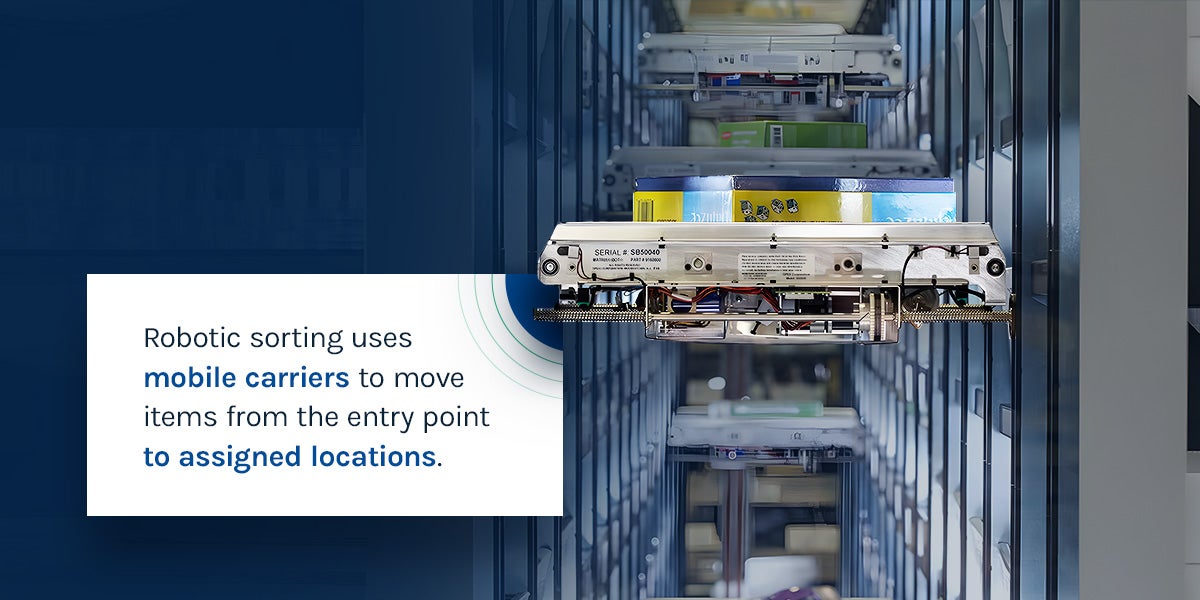
Robotic sorting uses mobile carriers to move items from the entry point to assigned locations. Software guides these wireless vehicles to the correct destination.
The design keeps orders moving swiftly. Carriers recharge as they move throughout the layout. A built-in scan tunnel reads barcodes and RFID tags on multiple sides, so items do not need to be precisely positioned during scanning.
Reclaiming Your Floor Space
Modern sorting layouts use floor space in a smarter way. This setup supports order processing without needing more space, so you gain more room inside the same building.
One system can replace several put walls or shelving rows. Combining these areas opens space for other tasks. The compact layout works well in micro-fulfillment centers as well as larger ones. Urban facilities with tight space gain some flexibility with a smaller footprint.
Redundancy and Reliability
Robotic sorting systems use many carriers that move at the same time. If one vehicle stops, others keep orders moving through the system. This setup lowers the risk of a full shutdown during busy periods. Operations continue during small issues or routine maintenance.
Manufacturers ship modular units in build order to speed up setup and reduce installation time. Pretested modules support consistent installation across different sites. Automated return paths send items for review when needed. LED lights guide staff through steps so teams resolve problems with fewer interruptions.
Head-to-Head Comparison: A-Frame vs. Robotic Sortation
High-volume operations with repeat items often use an A-frame system. Both A-frame and robotic sortation systems are suitable for different order patterns depending on the product mix and demand levels.
A-frame layouts, with their fixed dispensing channels, effectively reduce walk time. In contrast, robotic sortation minimizes manual handling by directly transporting items to final locations using mobile carriers. A-frame systems have a fixed design that is difficult to modify, whereas robotic sortation uses modular sections to increase capacity and add sort locations as needed.
Throughput and Speed
Throughput changes as order volume grows. A-frame systems move repeat items at steady speeds in a fixed layout. Robotic sortation handles single items and parcels at up to 2,400 items per hour. That speed helps teams process more orders in busy periods.
Each system increases capacity in a different way. While A-frame systems need physical changes to raise output, robotic sortation adds modules and carriers to increase flow. Teams can expand during peak season without rebuilding the entire setup.
Flexibility and SKU Variety
Order profiles now include many product shapes and packaging types. A-frame systems work best with consistent sizes and stable SKUs. In comparison, robotic sortation handles items of different sizes and orientations in the same flow. Teams can process varied products without separating them into strict group sizes.
A-frame layouts rely on fixed channels linked to specific items. Robotic systems allow mixed bin, tote, and box sizes within one setup. As SKU variety grows, robotic layouts adjust more easily without major physical changes.
Why Modern Fulfillment Is Shifting to Robotics
Order volume continues to grow in today’s warehouses. Companies now manage far more unique items than they used to. Customer expectations are higher, and delivery speed matters more than ever.
Facilities need automated sorting systems that grow with demand, use space wisely, and handle both single orders and large volumes with ease. Here is why most businesses are choosing robotics:
- Modular growth: Add more robots during peak season to increase capacity and reduce numbers when it is quiet.
- Smaller footprint: Use less floor space while still operating closer to customers.
- Predictive maintenance: Monitor system parts with software and get proactive alerts to handle problems early.
- Broader SKU range: Manage thousands of products across expanding ranges without additional equipment.
- Single-item shipping: Process individual orders to meet direct-to-customer demand without batch consolidation.
- Faster returns: Sort returned items to inventory without slowing down outbound fulfillment.
Building a Scalable Fulfillment Strategy
Fulfillment centers cannot handle rising order volumes and SKU complexity with rigid, single-purpose automation tools. Fixed A-frame systems work in some applications, but can limit product flexibility and require frequent replenishment. As e-commerce growth accelerates, businesses need technology that scales and adapts to shifting demand patterns.
The OPEX® Sure Sort® offers flexible, high-speed small-item processing. Sure Sort reduces manual handling, streamlines multi-line orders, and speeds up returns. Independent iBOT® carriers move items to configurable sort locations, while integrated scanning and software controls support accurate routing and real-time visibility.
Contact OPEX today to discuss how Sure Sort can support your fulfillment goals. Browse OPEX order fulfillment options to learn more.
Other Resources You Might Find Helpful
Kookaburra Transforms The Kitting Process To Deliver Excellent Customer Service
Optimizing Apparel Order Fulfillment – OPEX® SURE SORT®
Top 5 Supply Chain Challenges: What's Your Plan to Overcome Them?
Overcoming the Challenges of Implementing Warehouse Automation in Retail | OPEX
Advancements in Cold Chain Logistics for Pharmaceuticals
How AS/RS Supports Just-In-Time (JIT) Manufacturing
AMRs vs OPEX® Sure Sort® X for Sorting Operations
Rocky Mountain ATV Integrates the OPEX® Sure Sort® System Into Its Distribution Center, Reducing Manual Labor By 45%
From Bottlenecks to Breakthroughs: Optimizing Warehouse Operations with Technology
Sure Sort®: The Scalable Sorting Solution
NEXT LEVEL AUTOMATION
Unlock Operational Efficiency with OPEX
OPEX is powering the future of automation. Contact us to learn more about how our vertically integrated automated solutions can help take your business to new heights.