

Staffing gaps present an increasing challenge in warehousing and logistics. Recent data shows that many facilities experience an annual turnover exceeding 40%, and open positions are harder to fill. In a tight labor market, overall labor expenses have also increased.
As a result, executives face increasing pressure to maintain staffing levels while managing seasonal peaks and evolving workforce demands. Automation stands out as a sustainable and scalable solution. By 2027, more than 75% of companies will automate parts of their warehouse operations.
Benefits of Automated Sorting in Warehouses
Automation can help companies ease workforce challenges, accelerate order fulfillment, and expand as order volumes grow. For example, sorting is resource-intensive. Automating this process can be an effective labor-saving strategy — by reducing reliance on manual labor, your organization can lower expenses.
Discover how automated sorting systems reduce labor costs below.
1. Lowers Direct Labor Hours
Automated sorters process items using autonomous mobile robots (AMRs), robotics, conveyors, sorters, and control software. In addition to parcel processing, these systems support order fulfillment, cross-docking, returns, kitting, and store replenishment. By categorizing, separating, and routing items and orders, they handle repetitive work that would otherwise involve significant time and labor, directly impacting workforce requirements.
Lowering direct labor hours can reduce base wage spend in correlation with the hours removed. One of the most significant benefits of automated sorting in warehouses is that these systems do not require breaks or experience fatigue. Automation is not affected by absenteeism, delivering predictable productivity and avoiding onboarding costs for seasonal hiring and training, even during labor shortages.
2. Accelerates Processing Speeds
Due to their ability to handle thousands of items per hour, automated sorting systems deliver cost savings with accelerated processing times and an increased throughput. This can translate to fewer paid hours for the same volume or higher output with the same hours, lowering the cost of labor per order.
Beyond helping reduce warehouse labor costs, a higher throughput can let you process more orders, shipments, and returns to meet business-critical targets. A more efficient process also allows on-time sorting and dispatch to meet tight deadlines. Plus, automation keeps idle time to a minimum, clearing bottlenecks and maintaining high-level productivity.
3. Optimizes Workforce Allocation
With automated sorters, conveyors move packages, algorithms and sensors decide an item’s destination, and AMRs route goods to the next zone or station. Alongside reducing manual handling, this labor-saving warehouse technology cuts walking time, which can be particularly impactful in larger facilities. Minutes saved for each task accumulate into hours that no longer need to be paid per shift, helping lower direct labor spending.
Rather than replacing employees, automation allows teams to focus on important operational tasks like customer service and quality control. Future-focused organizations that invest in upskilling can also offer opportunities in roles such as maintenance, data analysis, and system operations. In addition to helping improve overall operational efficiency, this kind of work allows employees to focus on more fulfilling tasks that involve critical thinking, problem‑solving, and creativity. This can enhance job satisfaction.
4. Reduces Errors and Rework
Automated sorting systems deliver high accuracy. These systems use advanced sorting modules and sensors to identify and categorize items by pre-established criteria accurately. With higher first-pass accuracy, you can cut errors and missorts, eliminating non‑value work like re-scans, re-routes, re-picks, and re-packs. Labor hours and cost per order also tend to decline as a result.
If a wrong order reaches a customer, costs add up for everything from return shipping and processing to reshipment and additional handling. Research estimates a single mispick costs about $22 on average. With automation, you can trust items will be handled properly. Automated sorters carefully scan all packages, cross-referencing them with their correct destination. Any issues are instantly flagged, enabling immediate correction.
Beyond avoiding errors and the additional labor costs they create, increased accuracy can preserve customer relationships and improve credibility. In recent years, customers’ priority has shifted from speed to reliability. A 2025 McKinsey survey reports that customers rank on-time delivery higher than fast delivery — respondents stated they would rather wait as long as a week if their order arrives when promised. By minimizing rework, automation helps you meet deadlines and deliver on time, enhancing satisfaction.
5. Scales Operations Without Labor Increases
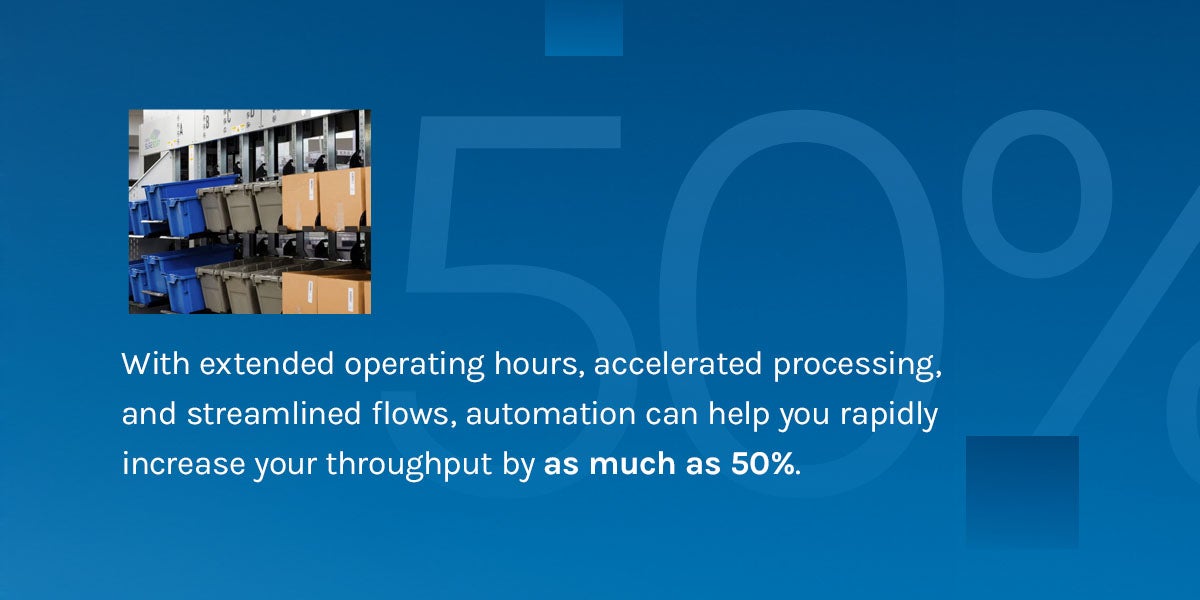
Manual operations typically involve months of hiring and training extra employees, and labor costs rise accordingly, from recruitment expenses to a higher payroll. Without proportional labor increases, automated sorters allow you to scale through consistent mechanical performance and adaptive software. With extended operating hours, accelerated processing, and streamlined flows, automation can help you rapidly increase your throughput by as much as 50%.
With advanced configurability, automated sortation integrates seamlessly into your current workflows while still scaling alongside your business. As you can ramp up for seasonality and adapt to fluctuating demands, you can avoid investing in additional capacity that goes unused during quieter periods.
Reducing Labor Costs in Warehousing With OPEX®
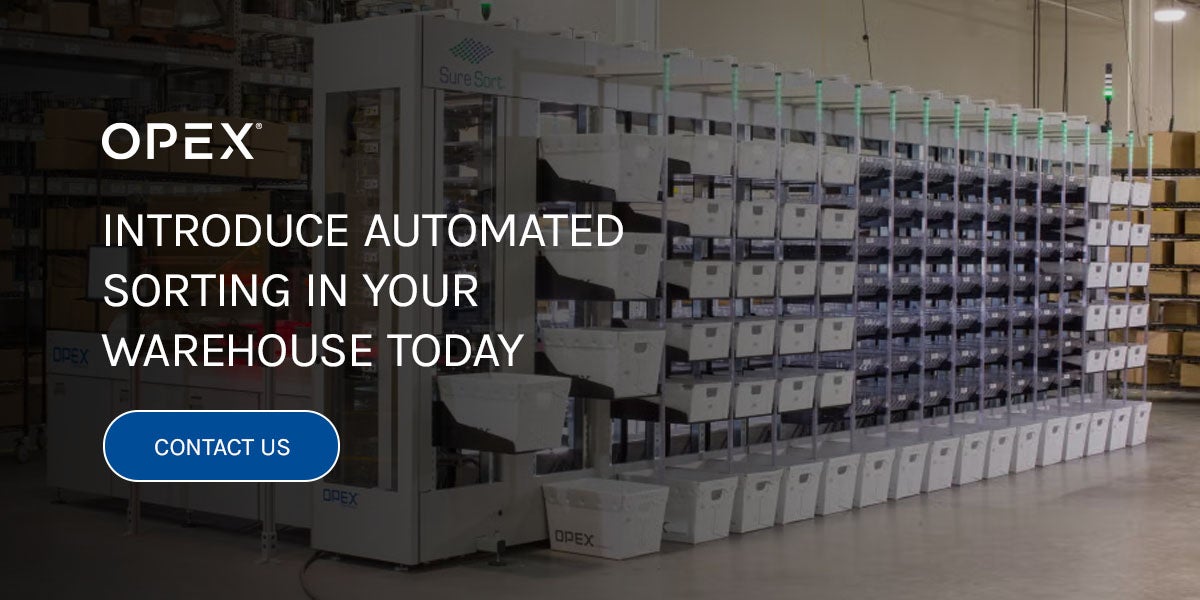
OPEX provides reliable sortation solutions that allow warehouse labor cost optimization through automation while increasing productivity, accuracy, and efficiency. Sure Sort® and Sure Sort® X replace as many as six manual put walls for each system, saving space, labor, and time. Both are easily configurable and integrate with warehouse control software and management systems.
In the following case study, you will see the results one of OPEX’s clients achieved with Sure Sort:
The Situation
As a leading beauty and health retailer in South Korea, Olive Young operates an expanding footprint of micro-fulfillment centers (MFCs). After launching a pilot site, the company opened several more and planned a metro MFC to broaden the assortment and speed delivery.
The Challenges
However, Olive Young’s processes faced the following challenges:
- Their throughput was limited to around 90 orders daily per person with their existing resources and labor.
- They used single-order handling rather than a total- or batch-picking process.
- They needed speedier processing in their new MFC with a wider SKU variety.
The new MFC’s goal was to shorten delivery lead times, grow sales, and increase customer value. To successfully scale operations and achieve the desired objectives without correlating increases in labor costs, the retailer planned to implement an automated sorting system at the center. This prompted their search for a scalable solution.
The Solution
Olive Young partnered with OPEX early in the new build, installing Sure Sort to optimize outbound fulfillment. Their new process adopted total picking, empowering workers to:
- Pick inventory by batches.
- Feed items into the system’s conveyor.
- Sort items to destination bins with iBOT® wireless robots.
The Results
By streamlining fulfillment and minimizing manual sorting, Olive Young cut processing time, increased efficiency, and improved accuracy while lowering labor costs per order. Here is a closer look at what OPEX helped them achieve:
- A 33% increase in orders per person each day.
- A productivity lift of as high as 60%.
- A daily average of 120 orders picked per person.
After this success, the retailer deployed Sure Sort to six MFCs, each operating with more than 80% utilization. Luxury, bulky, and fragile items remain picked by order, making up around 20% of products not automatically sorted.
Introduce Automated Sorting in Your Warehouse Today
Backed by 50 years of expertise, OPEX is the trusted warehouse automation partner for many businesses, including various Fortune 100 companies. The award-winning Sure Sort and Sure Sort X systems can help you reduce labor costs and processing time while scaling efficiently and handling demand swings.
Alongside advanced sortation technology, OPEX provides end-to-end support, including training, installation, and 24/7 technical assistance. Contact us today to introduce automated sorting in your warehouse.