
Maintaining continuous operations is essential for automated warehouses that aim to maximize productivity and deliver exceptional customer service. As automation becomes more prevalent, even brief periods of aisle downtime can disrupt workflows, delay order fulfillment, and impact bottom lines.
To stay efficient and competitive, warehouses need to address the root causes of aisle downtime and implement strategies to keep systems running smoothly. Teams can combine preventive maintenance, efficient system design, comprehensive training, and the adoption of advanced technologies to drive operational decision-making.
Common Causes of Aisle Downtime in Automated Warehouses
Recognizing the root causes of aisle downtime is the first step toward implementing effective prevention strategies. Common reasons for downtime include:
- Equipment failure: Mechanical breakdowns resulting from sensor malfunctions, motor failures, or worn-out parts can halt operations. Equipment failures can impact operations in a single aisle or disrupt the flow of goods through the warehouse, leading to significant productivity losses.
- Maintenance needs: Heavy equipment usage demands regular maintenance to keep automated systems running with as much efficiency as possible. Neglecting or delaying preventive maintenance can escalate minor issues into significant problems, potentially causing equipment failures. Teams must balance maintenance schedules with operational demands to avoid excessive downtime.
- Aisle congestion: Too many workers, robots, or pieces of equipment in a single aisle can create congestion that leads to traffic jams and delays. Poor system designs, sudden spikes in order volume, and inefficient routing algorithms can also contribute to aisle congestion. This issue can slow down picking and replenishment operations and increase the risk of collisions or equipment damage, further reducing throughput and creating bottlenecks that impact the entire warehouse.
- Software issues: Many warehousing teams use complex software for inventory management, equipment control, routing, and more. While this software is crucial for operation, problems like network outages, software bugs, or integration failures can disrupt communication between devices and systems and cause downtime in aisles. Even minor glitches can result in widespread problems that impact overall productivity.
- Human errors: Although automated warehouses aim to minimize human involvement, there is always a degree of supervision, exception handling, or maintenance necessary. Human errors like handling equipment incorrectly or failing to follow safety protocols can result in aisle downtime.
The Benefits of Minimizing Aisle Downtime
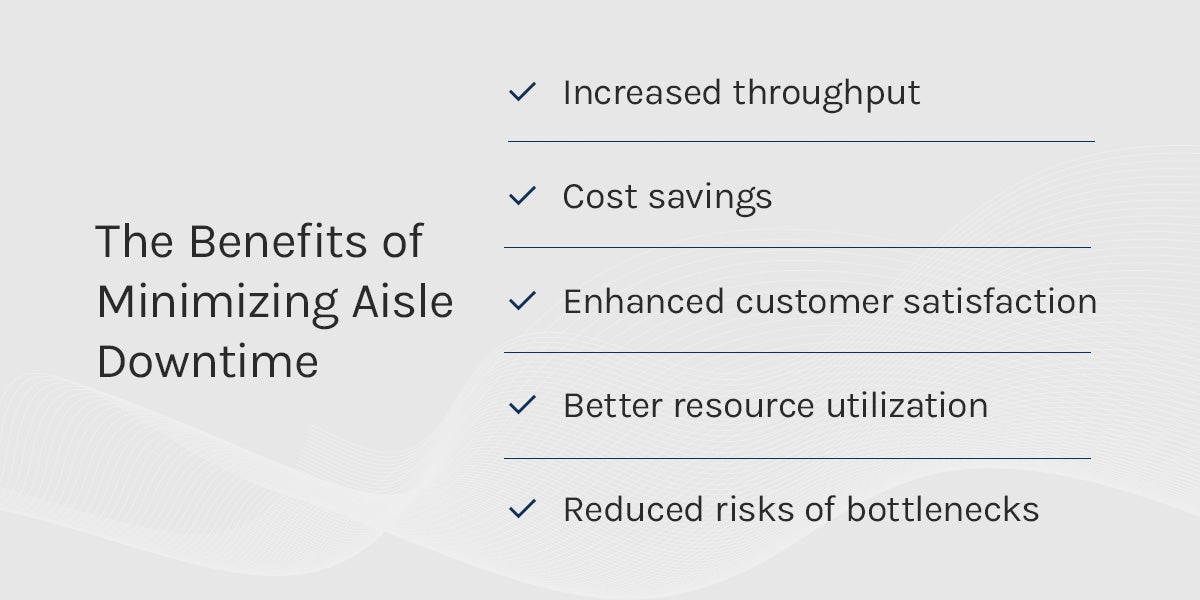
Minimizing aisle downtime directly supports operational efficiency, cost-effectiveness, and customer service excellence. Reducing aisle downtime in automated warehouses delivers benefits such as:
- Increased throughput: Minimizing downtime ensures goods move efficiently throughout the warehouse, allowing teams to process more orders in less time. This results in higher productivity and helps businesses effectively meet customer demands.
- Cost savings: Less downtime means fewer disruptions, reducing labor costs associated with troubleshooting. It also minimizes the financial impacts of lost sales opportunities and delayed shipments.
- Enhanced customer satisfaction: Reliable operations enable faster and more accurate order fulfillment, leading to timely deliveries and improved customer experiences.
- Better resource utilization: With less downtime, you can use resources more efficiently to reduce idle time and maximize your return on investment in automation technology.
- Reduced risks of bottlenecks: Continuous warehouse operations prevent congestion and workflow interruptions for a smoother and more predictable supply chain.
How to Eliminate Aisle Downtime in Warehouses
To capitalize on the benefits of minimized disruption, teams must implement strategies for keeping warehouse operations running smoothly. Consider these best practices for maintaining warehouse uptime:
1. Implementing Preventive Maintenance
Preventive maintenance is essential for eliminating aisle downtime. Scheduling regular inspections, calibrations, and timely part replacements allows teams to address potential issues before they escalate into costly breakdowns. Implementing a proactive approach to maintenance reduces the likelihood of unexpected equipment failures that halt operations.
Devise maintenance schedules based on usage data. You can use performance metrics and manufacturer recommendations to optimize timing and scope. Maintain an organized inventory of spare parts and train staff to recognize early warning signs of mechanical issues. Request annual inspections and touch-ups as necessary to support equipment longevity.
2. Using Efficient System Design
An efficient design is key to keeping warehouses running smoothly. Optimizing warehouse layouts can reduce congestion and ensure strategic placements to balance workloads. Advanced routing algorithms can help prevent traffic jams and bottlenecks, while modular designs allow for easy expansion and maintenance while minimizing disruptions.
Incorporating backup equipment and multiple access points makes designs more flexible and ensures a single failure does not halt an entire aisle. Regular reviews and design updates help teams respond to operational data and changing business needs to maintain optimal performance.
3. Choosing the Right Technologies
Selecting the correct technology is fundamental to operational success. Efficient warehouse aisle management requires performance monitoring. Tracking key performance indicators allows warehouse managers to identify bottlenecks, optimize resource allocation, and predict potential failures. The right technologies offer insights and capabilities to detect issues and enable rapid responses to disruptions.
The OPEX® Remote Performance Monitor (RPM®) is engineered for reliability and prioritizes your needs by enabling cloud-based platform monitoring. The platform delivers real-time status updates, performance metrics, and issue alerts from machines across all sites. RPM tracks key metrics including iBOT® availability, throughput, and equipment effectiveness, enabling you to identify potential failures before they occur. Your team will receive proactive alerts when conditions exceed your predefined thresholds.
4. Identifying Gaps in Training and Skillsets
Human error remains a significant contributor to aisle downtime, highlighting the need for comprehensive knowledge and skills training. Managers should regularly assess staff training and skillsets to identify gaps that could cause operational errors or slow response times.
Comprehensive training programs should cover equipment operations, troubleshooting, safety protocols, and emergency procedures. Supporting continuous learning and offering up-to-date resources enhances workforce competence and gives workers the knowledge and skills necessary to work efficiently and safely.
5. Using Analytics to Inform Decision-Making
Data drives impact. Collecting and analyzing data from equipment sensors, workflow metrics, software logs, and similar sources allows managers to identify patterns and root causes of downtime. Teams can consult predictive analytics to forecast potential failures and address an issue before it arises. Dashboards and real-time alerts can help teams prioritize maintenance and allocate resources effectively. Analytics can also reveal inefficiencies in system design, technology usage, and training to guide continuous improvement efforts.
Achieving Warehouse Downtime Reduction With OPEX®
OPEX is the next generation of automation. With 50 years of experience innovating the industry, OPEX has become a trusted leader in automated solutions. OPEX’s warehouse automation solutions feature cutting-edge technology and are designed to be flexible and modular according to specific operational needs and requirements.
RPM is a unique OPEX solution that tracks equipment performance and offers insights into improvements and efficiencies. With user-friendly dashboards and automatic alerts, warehousing teams can access critical information to understand equipment health and plan timely intervention to minimize disruptions. To discover what OPEX’s solutions can do for your warehouse, connect with our team.